[IR Insight] Tech Gap: AI In Everyday Life And DMX’s Edge
Summary (updated on 05/10/2026)
|
Seconds to know, months to touch
Every year, major technology shows such as CES, IFA and MWC unveil a wave of new products: AI, robots, smart glasses, wearables, smart homes. Vietnamese consumers are no longer behind the world on information. A product launched in the US, Japan, Korea or China shows up on Vietnamese social media within seconds.
But knowing about technology and experiencing it are two different things. Many technologies are already on shelves in developed markets, while Vietnamese consumers can only watch them on a screen, wait for months and sometimes never get to try them at all. DMX CEO Doan Van Hieu Em calls this the “Tech Gap”, the gap in technology experience, and believes the time has come for technology retailers to go beyond simply selling products: to bring the world’s latest technology to Vietnamese consumers as fast as possible, so that people can see it, touch it and experience it.
“When products are upgraded this much in technology, in AI… it creates new shopping demand. And Điện Máy Xanh can bring products like these to more consumers.” “Not just selling products, but selling solutions that make ownership easier, and selling peace of mind across the whole life of the product.” Mr Doan Van Hieu Em, CEO DMX |
The gap does not come from the demand side. Vietnam has more than 100 million people, a young population and consumers who adopt technology quickly. In 2025, the consumer electronics market fell 9% in volume but grew 12.6% in value (according to NIQ/GfK Vietnam), showing that buyers are willing to spend more on better products. What is missing is a channel wide enough to put new technology in their hands early.
The AI wave enters everyday life

The first phase of AI played out mainly in data centers. The next phase is moving into the devices and robots that are part of daily life, from the computer and the phone to the home. Even Nvidia, whose data center revenue grew from USD 11 billion to USD 194 billion in just four years, is betting that the next phase of AI will unfold not only in data centers but also on end-user devices (according to The Economist). The logic is economic: AI agents (agentic AI), software that can carry out a chain of tasks on the user’s behalf, require a very large amount of computing. Moving part of that workload from the cloud to end-user devices can help lower costs and improve efficiency.
The personal computer is the clearest example. At Computex 2026 in Taipei, Nvidia and Microsoft introduced RTX Spark, a platform that combines the central processing unit (CPU) and the graphics processing unit (GPU) and is designed to run AI agents directly on Windows PCs. ASUS, Dell, HP, Lenovo and MSI are expected to launch products this autumn, with Acer and GIGABYTE to follow (according to Nvidia). According to a Nvidia representative, this is the first time in 40 years that the PC has been redefined: from a model in which people operate the computer directly to one in which AI agents take on most of the work.
This cycle comes after a decade in which the PC market barely moved: desktop chip shipments fell about 4% a year, while laptops were broadly flat (according to Evercore). An ageing installed base creates natural replacement demand once a new generation offers enough reasons to upgrade.
Still, the AI PC is only one part of the wave. Home robots, smart home devices, smartwatches and health-tracking wearables, smart glasses, foldable phones: every year brings new product lines, most of them AI-enabled, and they are arriving faster than consumers can get used to them.
Why new technology needs to be experienced first-hand
These new product lines share three traits that make in-store retail more important:
- Hard to understand through a screen: The value of an AI PC or a home robot lies in how it works, not in its spec sheet. Buyers need to try it and have it explained before they decide.
- Higher ticket sizes: New-generation products usually carry higher specifications and higher prices than the previous generation. Pay-later plans at the point of sale let buyers upgrade without waiting until they have saved the full amount.
- Installation and after-sales support: Smart home devices, home robots and connected home systems need to be set up, connected and serviced by a skilled team.
That is why physical stores remain the main channel for these products. At DMX itself, the Super App and online channels contributed 14% of total revenue in the first eight months of 2026; most customers still choose to visit a store when buying products that need advice.
DMX’s advantage in the new wave
For Vietnamese consumers to experience new technology at almost the same time as the rest of the world, a retailer must get several things right at once: early product availability, a wide enough network, professional advice and service, and suitable payment options for buyers. DMX enters this wave with a strong foundation in each of these:
Requirement | DMX today |
|---|---|
Early availability | iPhone 18 went on sale in Vietnam in the same launch wave as global markets; more than 160,000 deposits in the first 30 minutes of pre-orders |
Coverage | More than 3,000 stores nationwide enable fast delivery to customers and are where people can see, touch and try new products |
Advice and service | Điện Máy Xanh Technician, with more than 4,000 qualified, full-time technicians |
Consumer financing | 38% of revenue via pay-later; 97% of products eligible for pay-later |
Financial strength | VND 44,670 billion (about USD 1.7 billion) in cash and short-term investments as of 30 June 2026, providing flexible headroom to capture new opportunities without relying on debt |
Source: DMX investor newsletter 8M 2026; consolidated financial statements Q2 2026.
Scale is an advantage in every new product cycle. When initial supply is limited and brands allocate stock by priority, the retailers with the largest sell-through usually get earlier access and larger allocations. As Vietnam’s largest ICT and consumer electronics retailer, DMX is well placed to bring in new products from the very first batch. As a multi-brand retailer, DMX also does not depend on which platform or brand comes out ahead: it benefits from upgrade demand across the whole industry.
The signal from computers is already clear: DMX’s laptop revenue rose 40% in the first eight months of 2026, among its fastest-growing categories. When AI PCs reach shelves this autumn, this will be one of the first tests of that advantage.
As a multi-category retailer, whenever a new product line emerges, DMX can bring it straight into its existing network without building from scratch: stores, advisory staff, installation technicians and pay-later plans are all already in place. This advantage is hard to replicate in product cycles that are short and fast-moving.
On 1 October 2026, DMX announced House of Future, the first project of The Next DMX: a space where people can explore and experience the world’s latest technologies first-hand, from AI and robots to smart devices, rather than a traditional retail store. This is how DMX turns the Tech Gap message into action, so that Vietnamese consumers do not just read about new technology on a screen but get to touch it and try it. Details on location and opening date will be announced in due course.
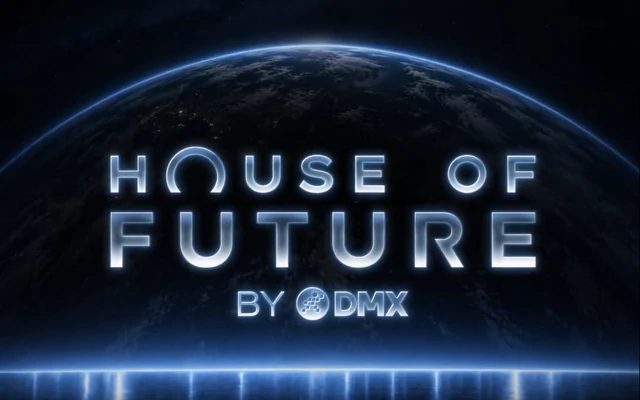 House of Future by DMX, announced on 1 October 2026.
What to watch
How quickly consumers take to new product lines, from AI PCs and home robots to smart home devices, still needs time to be proven, and each line will follow its own adoption curve. Rising component prices, memory in particular, could also push device prices higher. This is also when in-store experience and pay-later plans matter most: helping consumers understand a product before they buy and buy when they are ready.
Conclusion
The AI wave is leaving the data center and entering everyday life: from the computer and the smart home to robots that serve people. The AI PC is just one of many products in that wave. For Vietnamese consumers, the most important question is how long they must wait to get their hands on new technology.
DMX enters this stage from a solid foundation: revenue for the first eight months of 2026 reached VND 87,050 billion (about USD 3.3 billion), up 29% year on year, net profit after tax for the first six months rose 73%, and growth came from the productivity of the existing network. With its network, services and financial strength already in place, and House of Future newly announced. DMX is well positioned to help close the technology experience gap between Vietnam and the rest of the world.
About IR Insight. IR Insight is a series by the Investor Relations team of Dien May Xanh Investment JSC (HOSE: DMX), sharing perspectives on the latest developments across the technology and ICT/consumer electronics retail industries, helping investors better understand the sector, the opportunities emerging within it, and where DMX stands.
This content is provided for informational purposes only and does not constitute investment advice. This article contains forward-looking statements based on current expectations. Actual results may differ.