10-Month DMX Revenue Up 28% YoY, Q4 Expected To Peak For The Year
In the first 10 months of 2026, Dien May Xanh Investment Joint Stock Company (HOSE: DMX) achieved a consolidated revenue of VND 112,430 billion, up 28% compared to the same period last year and completing 92% of the annual plan. In October alone, revenue increased by 4% compared to September and was the highest month since the beginning of the year.
Growth Driven by Existing Stores
DMX grew while maintaining a stable domestic store network. Same-store sales growth (SSSG) increased by 29%, equivalent to the company's overall growth rate.
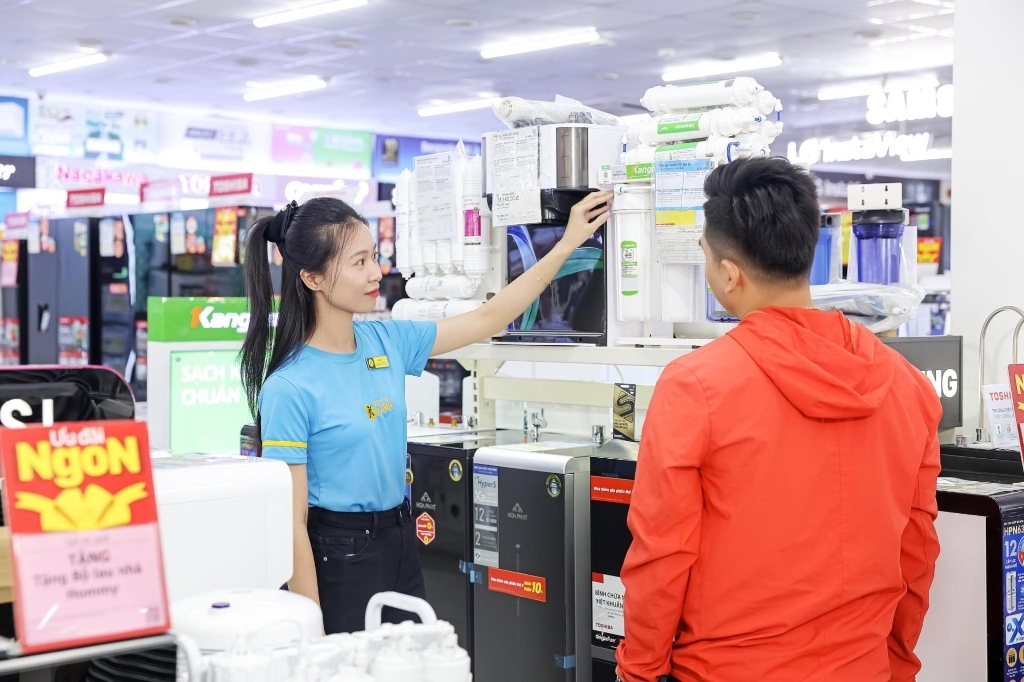
All three chains in Vietnam grew. Dien May Xanh and The Gioi Di Dong both increased by 28%, and TopZone increased by 34%. By product category, air conditioners increased by 50%, home appliances and laptops both increased by 30%, refrigerators and washing machines increased by 25%, Android smartphones increased by 20%, and services increased by 15%. ICT accounted for 57% of revenue, consumer electronics and home appliances accounted for 38%, and services accounted for 5%.
Cost efficiency continued to improve. In the third quarter, the ratio of administrative expenses to revenue reached 2.4%, down 0.7 percentage points compared to the same period last year. According to management, this result came from two changes: linking sales staff income to business performance instead of fixed salaries, and tying rental costs to the revenue of each store.
At the end of October, DMX operated 1,998 Dien May Xanh stores, 920 The Gioi Di Dong stores, and 86 TopZone stores.
Growth Across Five Strategic Pillars
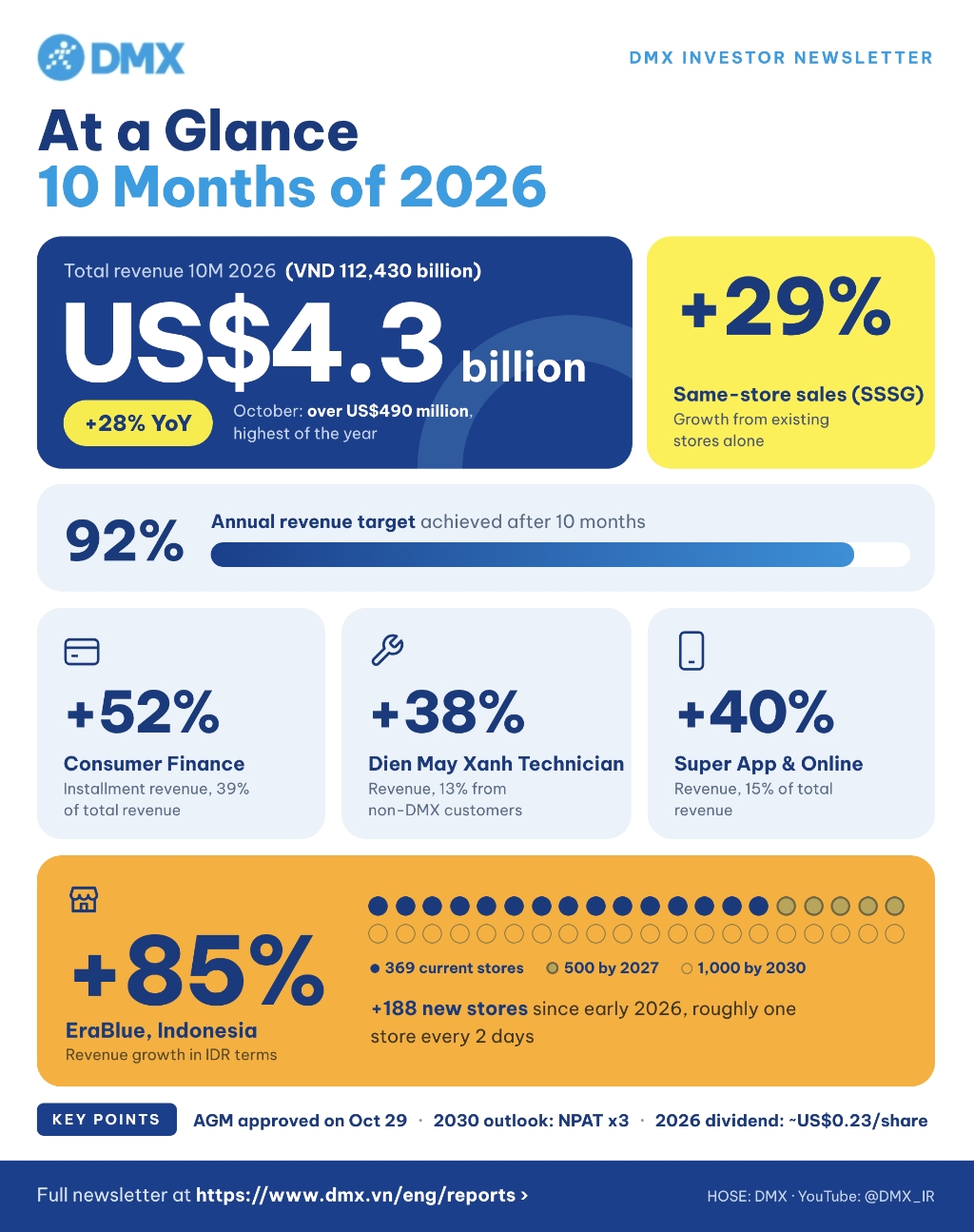
Installment sales revenue increased by 52% and accounted for 39% of total revenue, compared to 33% of the same period last year. Currently, 96% of products at DMX have installment solutions. The system also recorded 60 million utility and banking payment transactions (up 7%), with a total value of VND 92,000 billion (up 3%).
Dien May Xanh Technicians achieved revenue of VND 3,006 billion, up 38%. Revenue from customers outside the system reached VND 384 billion, up 44%.
The Super App and online channel achieved revenue of VND 16,322 billion, up 40% and accounting for 15% of total revenue. The Super App has 19.8 million members, an increase of 1.9 million people compared to the beginning of the year.
In Indonesia, EraBlue achieved a converted revenue of VND 5,289 billion, up 85% in Rupiah terms, with an SSSG of 12%. The chain has 369 stores, an increase of 188 stores compared to the beginning of the year.
Q4 And 2027 Orientation
DMX management expects Q4 to continue being the highest growth quarter of the year, thanks to the year-end shopping season and Tet. The company has increased inventory reserves to meet peak season demand.
DMX aims to increase the proportion of installment revenue to 45% in Q4 2026 and over 50% in 2027. Installment terms are expanded to 12, 18, and 24 months. The application approval rate is over 85%, and customers are approved directly on their phones in about 3 minutes.
For 2027 and subsequent years, management expects the ICT industry to grow in double digits. Phones are supported by the demand for configuration upgrades to use AI applications. Laptops are supported by the demand to switch to Windows 11 when Windows 10 stops being supported. Many devices purchased between 2020 and 2022 are also entering a replacement cycle. Consumer electronics and home appliances are expected to grow by double digits or more. With a current market share of about 50%, DMX still has plenty of room for growth in this product group.
From January 2027, new regulations will stop allowing the import of used electrical and electronic goods. DMX's entire portfolio consists of 100% brand-new, genuine products, so this regulation supports genuine retailers like DMX.
EraBlue aims for the milestone of 500 stores in Q1 2027 and opening at least 200 new stores in 2027, with expectations of high double-digit revenue and profit growth. All new stores achieved positive EBIT from the first month, and the chain has cleared all accumulated losses.
DMX is committed to maintaining a cash dividend payout ratio of at least 50% of annual net profit. Following an advance payment of VND 2,000 per share in December 2026, the remaining dividend will be submitted to the 2027 Annual General Meeting of Shareholders. The proposed plan may include paying dividends in shares combined with issuance from IPO capital surplus at a ratio of 1:1, aiming to enhance stock liquidity.
For the full year 2026, DMX is expected to achieve net revenue of VND 138,900 billion and profit after tax of at least VND 10,000 billion. By 2030, the company aims for double the revenue and triple the profit after tax compared to 2025.
Detailed information at https://www.dmx.vn/eng/announcements
This article contains forward-looking statements based on current expectations. Actual results may differ.